

Tiffany Lamp: Stained Glass Light with Character
A Tiffany lamp is recognisable from across a room, even when it is switched off. Hundreds of small pieces of coloured glass in amber, ruby, moss green and cobalt are joined into dragonflies, roses, butterflies or crisp geometric patterns, outlined by fine dark seams of solder. Switch it on and the shade becomes a glowing picture: warm, softly diffused and full of depth. Casa Padrino, an international supplier of luxury furniture, lighting and decorative pieces, offers a wide collection of Tiffany style lamps, from table lamps for the study and floor lamps for the reading corner to large chandeliers for hotel lobbies and restaurants.
This guide explains what makes a Tiffany lamp, how the copper foil technique works, where the style comes from and which type of fixture suits which room. You will also find practical advice on sizes, bulbs and care.
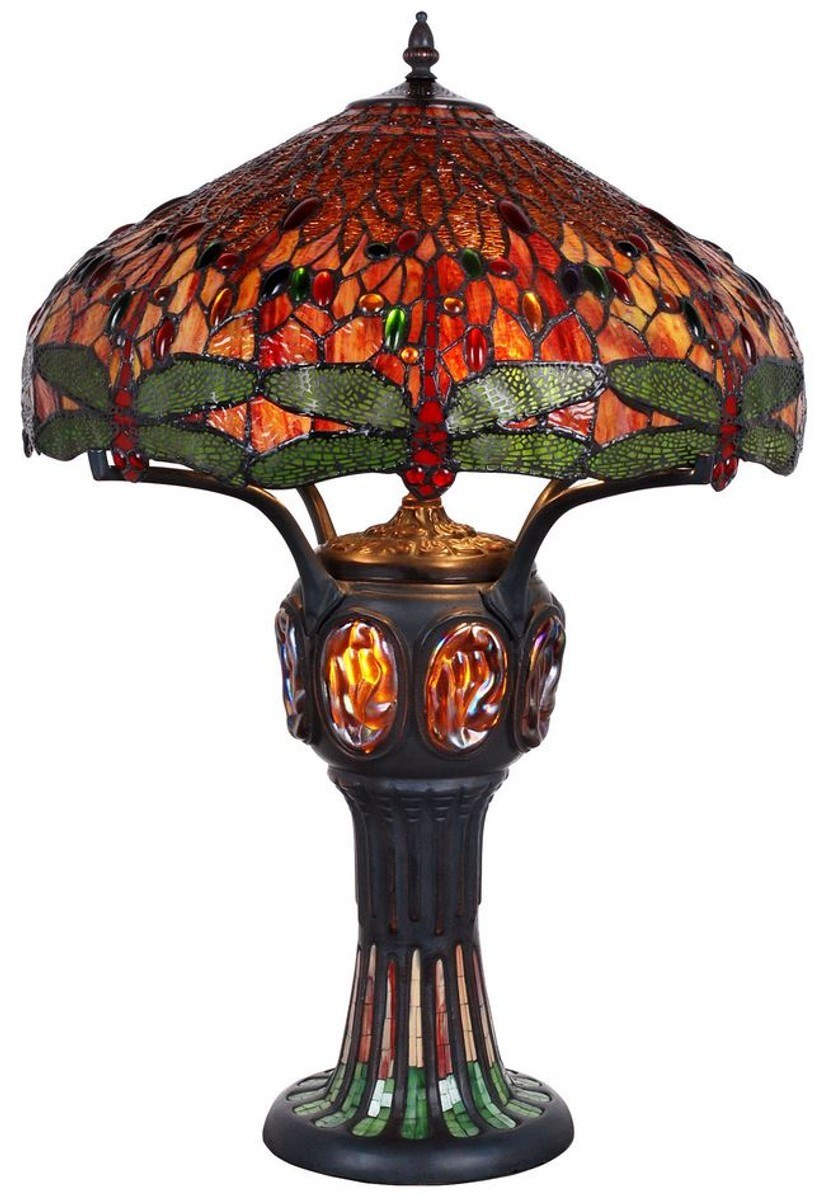
Green-winged dragonflies circle the 57.5 cm shade of this Tiffany table lamp, which stands 83 cm tall on a base set with coloured glass. Pictured: Casa Padrino Tiffany Table Lamp Black / Multicolour Ø 57.5 x H. 83 cm
What makes a Tiffany lamp
The heart of every Tiffany lamp is its shade. It is not made from a single sheet of glass but from many individual pieces, each cut to a pattern, ground at the edges and fitted together like a mosaic. Elaborate designs use several hundred pieces; one of the floor lamps in the Casa Padrino collection is assembled from 484 of them. Each piece is wrapped along its edge in a thin strip of copper foil. The pieces are then arranged on a mould and soldered together, which creates the dark lines that draw the pattern and give the shade its strength.
This copper foil method is what sets a Tiffany lamp apart from traditional leaded glass, the technique used for church windows. In leaded work the glass sits in H-shaped lead channels, which suits flat panels but not domes or tiny details. Copper foil allows curved shades, bells and cones, and pieces small enough to form a petal or the vein of a wing. In everyday language both are called stained glass.
The base is normally metal with a dark, bronze or antiqued finish, sometimes inlaid with glass as well. Small irregularities in the glass, such as streaks, ripples or tiny bubbles, are not flaws. They are the signature of handwork and part of the reason the light looks alive.
From a New York studio to the world: the story of the Tiffany style
The name goes back to Louis Comfort Tiffany (1848 to 1933), the son of the founder of a famous New York jewellery house. He worked as a painter and decorator before turning to glass. From the 1890s his New York studios produced windows, mosaics, vases and, above all, lamps, using shimmering, mottled glass developed in his own workshops. Many celebrated designs were created by his team; Clara Driscoll, who led the women's glass cutting department, is credited with several of the best-known dragonfly and floral shades.
Artistically, the Tiffany lamp belongs to the period around 1900 that Americans and Britons know as Art Nouveau. The movement looked to nature for its forms: flowing lines, tendrils, water lilies, peacock feathers and dragonflies. Later, the style absorbed the cleaner lines of Art Deco, with fans, steps and geometric patterns. Both strands live on in the Tiffany lamps at Casa Padrino.
A word on authenticity. Lamps from Louis Comfort Tiffany's own studios are museum pieces and collector's items; one of the largest collections is held by the Morse Museum in Winter Park, Florida, and fine examples appear at major auction houses. Casa Padrino does not sell originals. We offer Tiffany style lamps that follow the traditional technique and design language, are handmade from many individual pieces of glass and are fitted with modern lamp holders for everyday use. Here, Tiffany describes a technique and a style, not the workshop in which a lamp was made.
Tiffany style lamps at a glance
There is a Tiffany lamp for every lighting task in a home or a hospitality project. The collection is organised by type:
- Tiffany table lamps: from compact desk lamps to statement lamps 83 cm tall, for sideboards, console tables, bedside tables and desks.
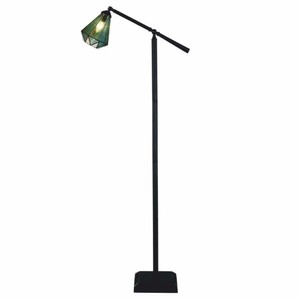
- Tiffany floor lamps: heights from about 145 to 185 cm, as a reading light beside an armchair or a pool of light in a living room.
- Tiffany pendant lamps: on chains above dining tables, billiard tables, bars and kitchen islands.
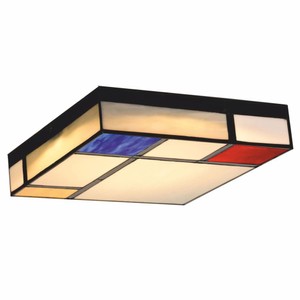
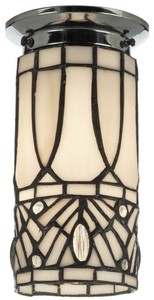
- Tiffany ceiling lamps: flush and semi-flush fittings for hallways and lower rooms, as well as large chandeliers for halls.
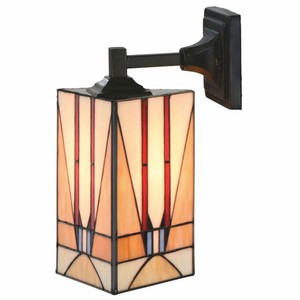
- Tiffany wall lamps: for staircases, corridors and bathrooms, or in pairs either side of a mirror.
Rooms come alive when several of these work together: a pendant over the table, a table lamp on the sideboard and a wall light in the passage divide one space into several warm zones instead of flooding it from above. The full range is in the Tiffany lamps category.
Tiffany floor lamps for the den, the library and the bay window
Placed beside a wing chair, a sofa or a window seat, the lamp throws light over your shoulder onto the page while the coloured shade stays in view. In an American Craftsman bungalow or an Edwardian drawing room, a leather armchair with a Tiffany floor lamp beside it has been a classic pairing for over a century.
When choosing, look at height and shade diameter. Lamps of around 145 to 160 cm with a 40 to 50 cm shade sit comfortably next to an armchair, while taller models up to 185 cm suit high ceilings and empty corners. Many have two lamp holders with pull chains, so you can switch between a softer and a brighter setting. The floor lamp pictured measures 46 cm across and 157.5 cm in height, with two E27 holders and a base in vintage bronze.
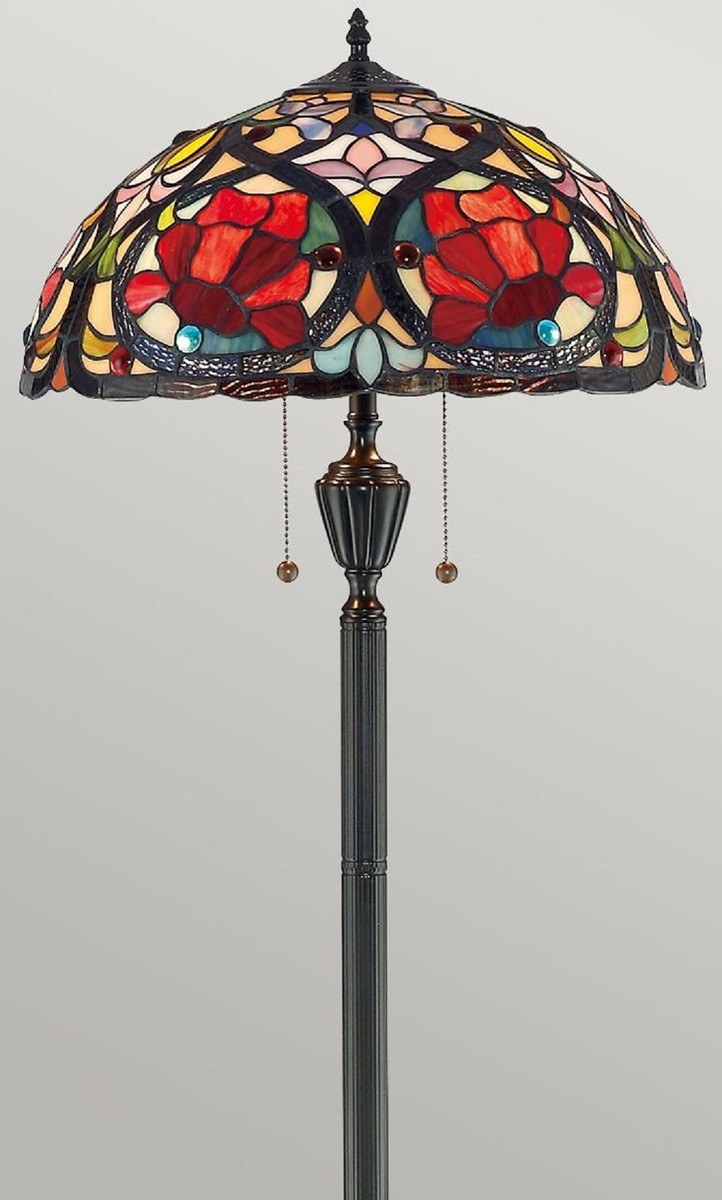
A band of red blossoms on amber glass: Tiffany floor lamp with a 46 cm shade and a vintage bronze base. Pictured: Casa Padrino luxury Tiffany floor lamp multicolored / vintage bronze Ø 46 x H. 157.5 cm
More designs with floral, butterfly and Art Deco shades are in the Tiffany floor lamps category.
The Tiffany table lamp: the piece that started it all
The table lamp is the best-known form of the Tiffany lamp and the most versatile. On a desk it gives focused, glare-free light; on a hall console it welcomes guests; on a bedside table it replaces harsh overhead light. As a rule of thumb, the lower edge of the shade should sit roughly at the eye level of someone seated, so nobody looks straight into the bulb.
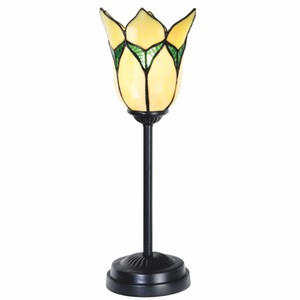
Smaller Tiffany table lamps of around 55 to 65 cm suit desks and bedside tables. Larger pieces of about 80 cm with a broad shade belong on a sideboard, a library table or a generous side table next to the sofa. The dragonfly lamp at the top of this page, with its 57.5 cm shade and 83 cm height, is one of the large formats. A special group are figurative Art Deco lamps, in which a metal sculpture carries the glass shade. Browse all Tiffany table lamps.
Tiffany pendant and ceiling lamps over the table
Above the dining table a Tiffany lamp shows its full strength. A pendant directs light onto the table, makes glass and porcelain sparkle and gives faces a flattering glow, while the coloured shade floats above. The lower edge should hang about 60 to 70 cm above the tabletop, so it does not dazzle and keeps the view across the table open. Pendants on chains can be set to exactly this height.
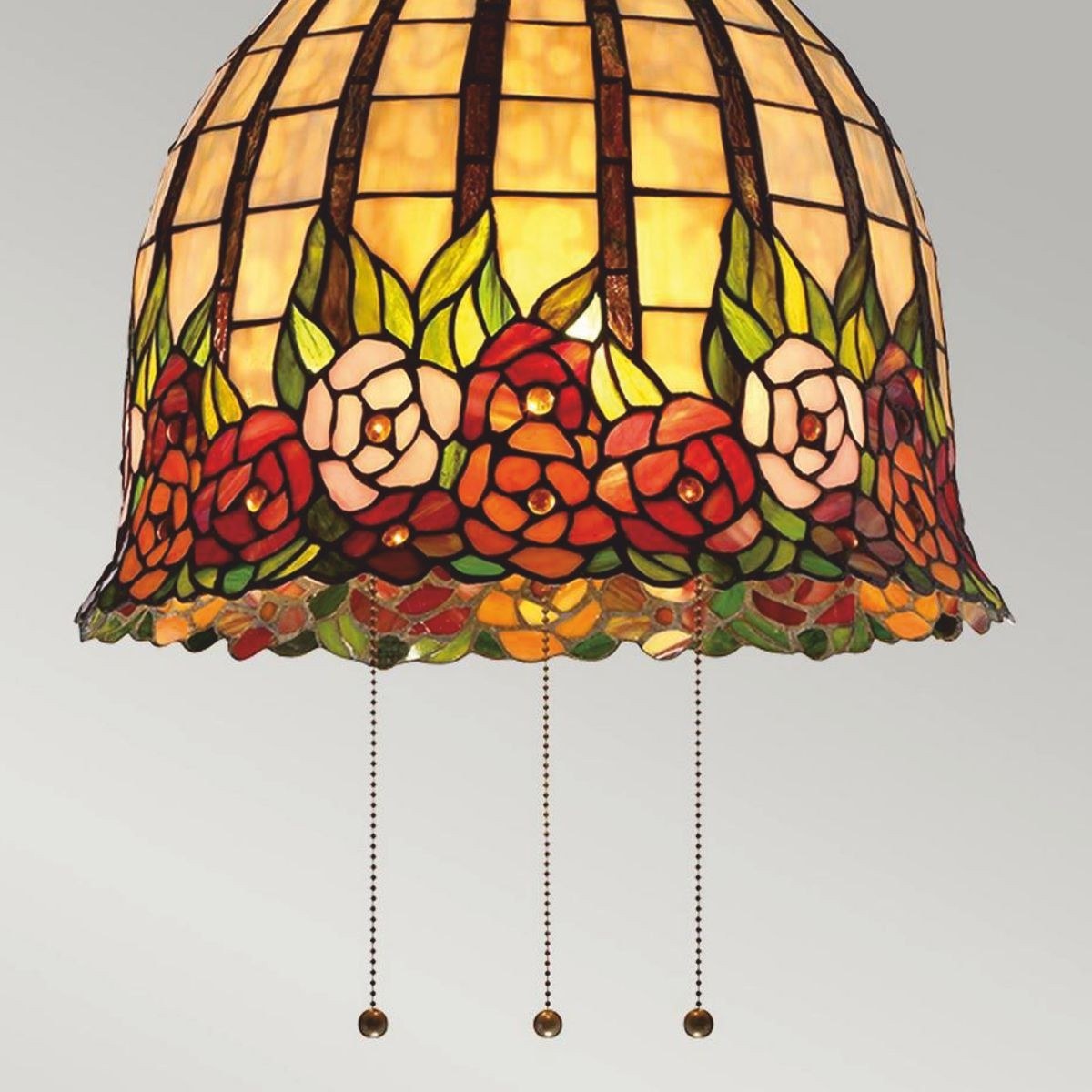
A bell-shaped shade with a garland of roses: this Tiffany pendant measures 38.1 cm across and hangs on a chain adjustable from 48.1 to 170 cm overall height. Pictured: Casa Padrino luxury Tiffany hanging lamp roses colorful / bronze Ø 38.1 x H. 38.3 cm
A shade of 38 to 50 cm suits a round table for four to six. Over a long table, two or three identical pendants in a row look better than a single large one. The pendant pictured has three E27 holders and a steel frame and weighs 3.6 kg. For hallways, cloakrooms and rooms with lower ceilings, a flush or semi-flush Tiffany ceiling lamp is the better choice. Find more in Tiffany pendant lamps and Tiffany ceiling lamps.
Tiffany on a grand scale: chandeliers for lobbies and restaurants
The technique works on a large scale too. A chandelier made of glass panels shapes an entrance hall, a stairwell or a dining room with a calm, even glow rather than sparkling crystals. In hotels and bars with wood panelling and chequerboard floors, it recalls the grand cafés of the early twentieth century.
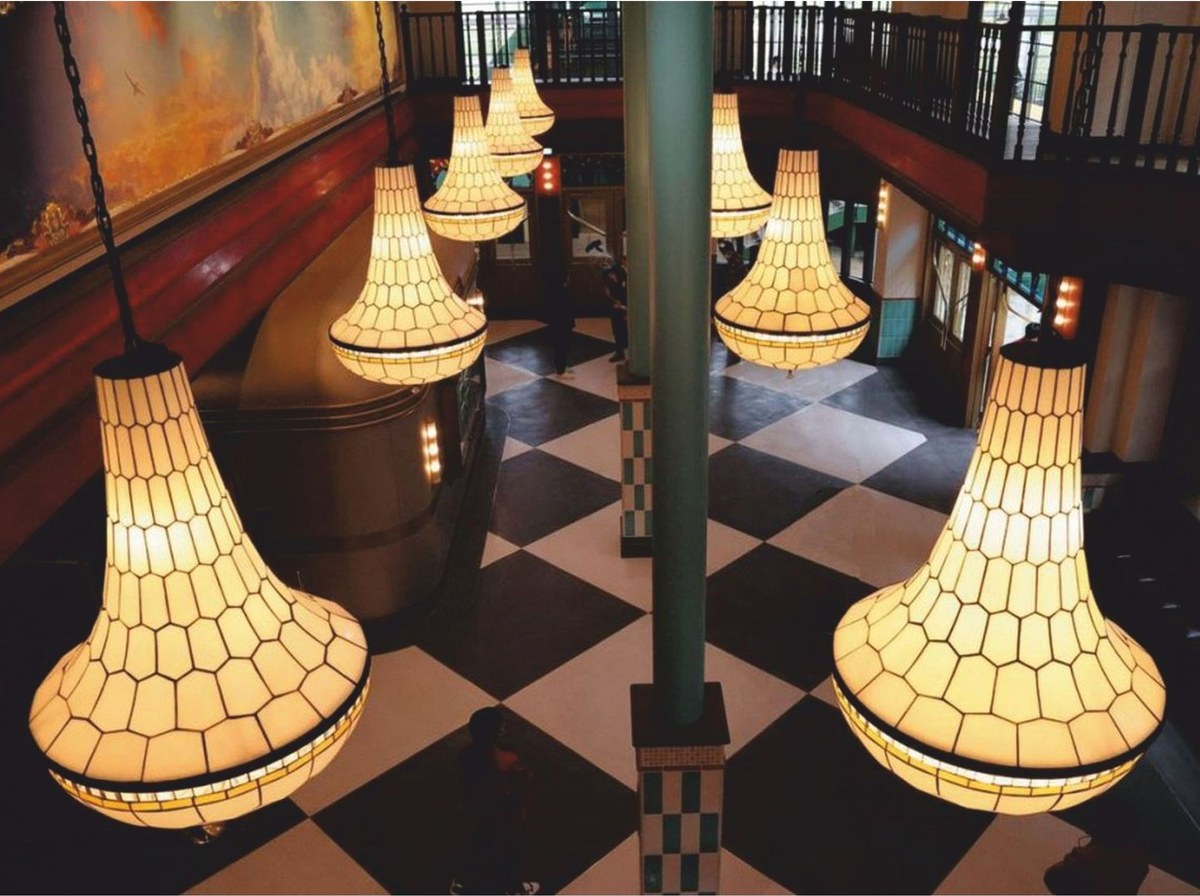
A row of Art Deco chandeliers in the Tiffany style above a hall with gallery: each measures 85 cm across and 120 cm in height, on a 250 cm chain. Pictured: Casa Padrino Art Deco LED Tiffany Chandelier White / Black H. 120 cm
The chandelier pictured combines white mother of pearl glass, crystal glass and metal. It uses LED technology and comes with a remote control. At 120 cm tall on a 250 cm chain, it needs generous room height: double-height halls, stairwells over several floors or banqueting rooms. For hotels, restaurants and bars, Casa Padrino can put together a complete family of fixtures, from chandeliers for the lobby to table lamps for the reception desk. Read more on our page about hotel lighting.
Motifs, colours and the effect of a Tiffany shade
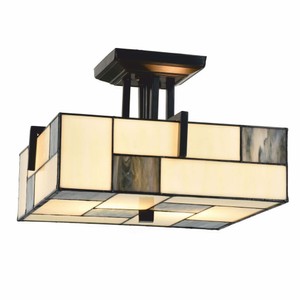
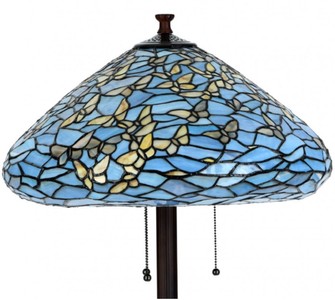
A Tiffany shade filters, colours and spreads the light. Below it falls a bright, useful cone; through the glass comes a coloured glow. You get task light and mood light at once. The motif sets the character: dragonflies, a classic Art Nouveau theme, feel light and summery; roses and floral garlands are romantic; butterflies on blue glass are fresh and cheerful. Geometric patterns with diamonds, fans and steps belong to Art Deco and sit well with brass, marble and dark wood.
Amber, honey and ochre give the warmest light, green and blue are calmer and red adds a strong accent. Cream and mother of pearl glass let through the most light. Deep wall colours such as sage, navy or warm grey make the glass glow. If you combine several Tiffany lamps, keep one base colour and vary the motifs; one Tiffany lamp per line of sight is usually enough.
Bulbs: the right light for a Tiffany lamp
Most Tiffany lamps at Casa Padrino take E27 bulbs, the European screw base; some flush ceiling lamps use the smaller E14. The maximum wattage is listed with each product and ranges from 40 to 100 watts depending on the model. Bulbs are usually not included.
For the classic look, choose warm white LED bulbs of around 2,700 kelvin. They make amber and red glow without distorting the colours, whereas cool white light above 4,000 kelvin drains the warmth from the glass. LEDs also produce far less heat than old incandescent bulbs, which is kinder to glass and solder.
Caring for your Tiffany lamp
A Tiffany lamp needs little care if you follow a few rules. Switch it off and let it cool before cleaning. Remove dust with a dry, soft cloth or a soft brush that reaches into the solder seams. For heavier soiling a slightly damp cloth is enough; dry the glass straight afterwards.
Avoid abrasive products, solvents and harsh glass cleaners, especially those containing ammonia or vinegar, as they can attack the patina on the solder lines. Never spray cleaner directly onto the shade, and when changing a bulb, hold the lamp by its base rather than by the shade.
Casa Padrino: Tiffany style lamps with standards
Casa Padrino stands for luxury furniture, lighting and decorative pieces with character, for private clients as well as hotels, restaurants, castles and villas in many countries. Casa Padrino ships worldwide and works with architects, interior designers and developers on projects of every size.
Explore the complete range in Tiffany lamps, divided into table lamps, floor lamps, pendant lamps, ceiling lamps and wall lamps, and discover our full collection of luxury furniture, lighting and decor at www.casa-padrino.de/en.
Frequently asked questions about Tiffany lamps
What is a Tiffany lamp?
A Tiffany lamp has a shade made of many individual pieces of coloured glass, each wrapped in copper foil and soldered together. The style goes back to the New York glass artist Louis Comfort Tiffany and belongs to the Art Nouveau period around 1900.
Are these original Tiffany lamps?
No. Originals from Louis Comfort Tiffany's studios are antiques found in museums and at auction. Casa Padrino offers Tiffany style lamps, handmade from many pieces of glass in the traditional technique and fitted with modern lamp holders for everyday use.
What is the difference between Tiffany and leaded glass?
In leaded glass the pieces sit in H-shaped lead channels, which suits flat windows. In the Tiffany technique each piece is wrapped in copper foil and soldered, which makes curved shades and very small pieces possible. Both are often simply called stained glass.
Which Tiffany lamp suits a living room?
A Tiffany floor lamp beside the reading chair and one or two Tiffany table lamps on a sideboard or side table create several warm pools of light.
How high should a Tiffany pendant hang above a dining table?
Allow about 60 to 70 cm between the tabletop and the lower edge of the shade. Pendants on chains can be adjusted to this height; the rose pendant from Casa Padrino, for example, can be set from 48.1 to 170 cm overall.
What bulbs should I use in a Tiffany lamp?
Warm white LED bulbs of about 2,700 kelvin in the base stated for the product, usually E27. They bring out the warmth of the glass and run cool.
How do I clean a Tiffany lamp?
Switch off and let it cool, then dust with a dry, soft cloth or brush. If needed, use a slightly damp cloth and dry immediately. Avoid abrasives, solvents and cleaners with ammonia or vinegar.
Are bubbles or streaks in the glass a defect?
No. Art glass is worked by hand, and small bubbles, streaks and colour variations are part of its character.
Does a Tiffany lamp work in a modern interior?
Yes, often beautifully. In a light, minimal room a single Tiffany lamp becomes a deliberate contrast and a focal point. Give it space.
Does Casa Padrino deliver Tiffany lamps internationally?
Yes. Casa Padrino delivers Tiffany lamps and its entire collection internationally to private clients, hotels, restaurants and architects.